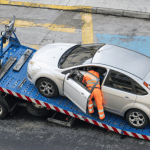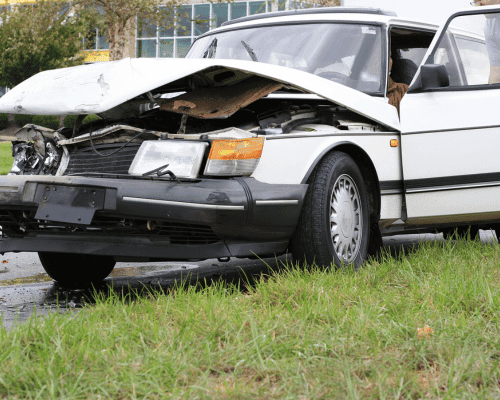
Somebody has driven into you, it was not your fault, and your car is not going anywhere. Standing at the roadside, the question nobody has explained is a simple one: who is paying for the truck?
The honest answer is that it depends who arranges it, and that the decision you make in the next ten minutes affects the answer. This is an area with a lot of people making a lot of money from confusion, so here is the plain version.
Three different things get called “free recovery”
Your own breakdown cover. If you have it, it will usually recover you after an accident as well as a breakdown, though some policies exclude collision damage. It costs you nothing extra because you have already paid for it. Check what your policy actually says rather than assuming; our look at whether breakdown cover is worth it covers what these policies typically include.
Your insurer’s arrangement. Comprehensive policies generally include recovery after an accident, and the insurer will send an approved operator. This is the simplest route and it is why the first call after the emergency services should usually be your own insurer.
Recovery paid for by the at-fault driver’s insurer. This is what people usually mean by free recovery in a non-fault claim. Because the other driver is liable, their insurer is ultimately responsible for the reasonable costs of dealing with your vehicle, including moving it. It is not free; it is paid by somebody else, later, and only if liability is accepted.
Why that last one is not automatic
The word doing the work is eligible. Recovery is recoverable from the other side when liability is admitted or established. If the other driver disputes it, if there is no third party, or if liability is split, the position changes and somebody has to pay in the meantime.
That is why any honest operator, including us, will tell you that a non-fault arrangement is subject to the insurer accepting it. Anyone promising you an unconditional free recovery at the roadside before a single insurer has been contacted is telling you something they cannot know.
Credit hire and credit repair, explained plainly
You may be offered a replacement car, and sometimes repairs, on credit while your claim runs. The company providing them recovers their costs from the at-fault insurer afterwards. Done properly it is a legitimate arrangement and it exists because you should not be out of pocket for someone else’s mistake.
The part to understand is that you are usually signing a hire agreement in your own name. If the claim fails, or the costs are found to be unreasonable, the liability can come back to you. That is not a reason to refuse it. It is a reason not to sign it standing in the rain at the side of a road while somebody waits.
Take the paperwork, read it somewhere dry, and ask your own insurer first. A reputable firm will have no problem with that.
What to do at the scene, in order
Safety first: if anyone is hurt or the vehicles are in a live lane, call 999 before anything else. After that:
Exchange details. Name, address, phone, insurer and registration. You are legally required to give yours and entitled to theirs.
Photograph everything before it moves. Both cars, the damage, the position on the road, the road markings, any signage. Once the vehicles have been moved that evidence is gone, and liability disputes turn on exactly this.
Call your own insurer. Even if you intend to claim against the other driver, tell your insurer. Most policies require it, and doing so does not commit you to claiming on your own cover.
Take your belongings. Documents, chargers, the contents of the boot, the parking permit on the windscreen. Once the car is in storage, getting them back means an appointment and sometimes a fee. Our guide to what happens to your car after an accident explains where it goes next.
Where we fit in. DK’s Recovery moves damaged vehicles across Sheffield and South Yorkshire 24 hours a day, and we will take the car wherever you tell us — your garage, a body shop, your home, or an insurer’s approved repairer. Where a non-fault arrangement applies, it is subject to the insurer accepting it, and we will say so rather than promise otherwise. Call +44 7867 860723 and tell us where the car is and where it needs to go.
Storage charges are the thing that catches people
A damaged car put into storage accrues a daily charge, and those charges are recoverable in a successful claim but real money if the claim stalls. The single best way to keep them down is to decide quickly where the car should actually be, and to tell whoever is holding it.
If the car is repairable and you have a garage you trust, say so early. If it is likely to be written off, the insurer will want to inspect it, and that inspection is what starts the clock on everything else.
You choose the repairer
Worth knowing because it is often glossed over: you are not obliged to use the insurer’s approved repairer. Using one usually comes with conveniences — a guarantee, a courtesy car, no need to get estimates — and there is nothing wrong with it. But it is a choice, and if you would rather use a garage you know, you can.
The short version
Call 999 if anyone is hurt. Photograph everything before it moves. Get the other driver’s details. Ring your own insurer before you sign anything. Take your belongings out of the car. And treat any promise of unconditional free recovery made at the roadside with the caution it deserves.
Frequently asked questions
Who pays for recovery after a non-fault accident?
If liability is accepted, the at-fault driver’s insurer is ultimately responsible for the reasonable costs of dealing with your vehicle, including recovery. Until liability is established, that is not guaranteed, which is why arrangements described as free recovery are always subject to the insurer accepting them.
Should I call my own insurer even if it was not my fault?
Yes. Most policies require you to report an accident regardless of fault, and telling them does not commit you to claiming on your own cover. It is also the quickest route to a recovery that is definitely covered.
Is credit hire safe to accept?
It is a legitimate arrangement and it exists so you are not out of pocket for someone else’s mistake. The thing to understand is that you are usually signing a hire agreement in your own name, so if the claim fails or the costs are found unreasonable the liability can return to you. Take the paperwork away, read it, and speak to your insurer before signing.
Do I have to use the insurer’s approved repairer?
No. Using one often comes with a guarantee and a courtesy car and there is nothing wrong with it, but you are entitled to use a garage of your own choosing.
What should I photograph at the scene?
Both vehicles, all the damage, the position of the cars on the road, road markings, signage and any debris, all before anything is moved. Liability disputes are frequently decided on exactly this evidence, and once the cars are moved it cannot be recreated.
Who pays for storage while the claim is sorted out?
Storage accrues daily and is recoverable in a successful claim, but it is real money if the claim stalls. The way to keep it down is to decide quickly where the car should be and tell whoever is holding it.