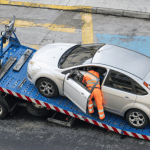
A police officer has stopped the car, checked the Motor Insurance Database, and the car has gone on the back of a truck. It happens at the roadside in about ten minutes and it is far more common than most drivers realise.
The important thing to understand straight away is that the clock is short. This is not like a parking ticket that waits for you. An unclaimed vehicle can be disposed of within days.
What has actually happened
Police can seize a vehicle under section 165A of the Road Traffic Act 1988 where an officer has reasonable grounds to believe the driver was uninsured, or was not driving in accordance with their licence. It is a power to seize the vehicle, not a punishment of the driver, and that distinction matters: the car can be taken even when the driver is not the owner.
That is the scenario that catches families out. Somebody borrows a car believing they are covered by their own policy’s driving-other-cars extension, that extension does not apply, and the owner loses the car over somebody else’s mistake.
The first hour
Find out which pound has it. The seizure notice should say, and if it does not, the force that seized it will tell you. Then read the notice properly rather than skimming it, because the deadline on it is the only date that matters.
Storage is charged daily and usually starts the day after seizure. That is why “I will sort it on Monday” is expensive advice.
What the pound will want to see
Turn up without the full set and you will be sent away, so gather it before you travel:
Photo identification — passport or driving licence.
The V5C registration certificate, and proof of address matching it. If you have recently bought the car and the V5C has not arrived, sort that out first, because you will struggle to prove entitlement without it.
A valid certificate of motor insurance. This is the one that trips people. It is not enough to have insurance in general — the policy has to permit the release of a vehicle impounded by an authority, and some cheaper policies specifically exclude it. Ask your insurer that exact question before you go.
A valid driving licence for whoever will drive it away, plus tax, and an MOT unless the vehicle is being recovered rather than driven.
Payment for the release fee and accumulated storage. Fees are set nationally and vary with the size and condition of the vehicle.
If you cannot drive it away, we can move it. No MOT, no tax, no licensed driver available, or simply nobody who wants to drive an uninsured-looking car home — a released vehicle can go on a flatbed instead, which is lawful and avoids a second offence. DK’s Recovery covers Sheffield and South Yorkshire 24 hours a day on +44 7867 860723, and our guide to transporting a car with no MOT explains the position.
The deadline, and why it varies
Forces set their own procedures within the national framework, and the window before disposal is short — often around a week from the seizure notice. Do not take a figure from a website in another county, this one included, as gospel. Ring the force that seized it and ask what date the vehicle can be disposed of. In this area that means South Yorkshire Police.
Vehicles genuinely do get sold or crushed this way, and the people it happens to are almost never people who refused to pay. They are people who assumed there was more time.
If you are not the driver but you own the car
You can still reclaim it, and you should move quickly, because the deadline runs from the seizure rather than from when you found out. You will need to prove you are the registered keeper and produce insurance that covers the vehicle.
Whether you then let that person drive your car again is your business. But it is worth checking exactly what your own policy says about other drivers, and what theirs says about driving other cars, because the assumption that “third party covers me on anything” has not been broadly true for a long time.
If somebody else collects it for you
Generally possible where you genuinely cannot attend — abroad, in hospital, in custody, or with a disability that prevents it. Expect to provide written authority and proof of your identity, and the person collecting will need their own valid licence and insurance. Ring the pound first and ask what they specifically require, because turning up with the wrong paperwork wastes a day you may not have.
What happens afterwards
The seizure is separate from any prosecution. Driving without insurance carries a fixed penalty with points, and can go to court, where the penalties are considerably heavier. Getting the car back does not make that go away, and paying the release fee is not an admission of anything.
The practical lesson most people take from it is duller than the drama of the day: check the Motor Insurance Database entry for your own vehicle occasionally, and make sure the policy renewed when you thought it did.
Frequently asked questions
Why has my car been seized?
Under section 165A of the Road Traffic Act 1988 police can seize a vehicle where an officer has reasonable grounds to believe the driver was uninsured or was not driving in accordance with their licence. It is a power over the vehicle rather than the driver, which is why a car can be taken even when the owner was not driving.
How long do I have to get it back?
Not long. The window before a vehicle can be disposed of is short, often around a week from the seizure notice, and storage is charged daily from the day after seizure. Forces set their own procedures, so ring the force that seized it and ask for the exact disposal date rather than relying on a general figure.
What do I need to take to the pound?
Photo ID, the V5C and proof of address matching it, a valid driving licence, tax, an MOT unless the vehicle is being recovered, payment for the release and storage fees, and a certificate of motor insurance that permits release of a vehicle impounded by an authority.
My insurance will not release an impounded car. What now?
Some cheaper policies specifically exclude impound release, so ask your insurer that exact question before you travel. If your policy will not do it you may need short-term impound release cover, which several insurers sell specifically for this.
Someone else was driving. Can I still get my car back?
Yes, as the registered keeper, and you should move quickly because the deadline runs from the seizure rather than from when you found out. You will need to prove you are the keeper and produce insurance covering the vehicle.
Can I have it taken away on a truck instead of driving it?
Yes, and often that is the sensible answer, particularly where there is no MOT, no tax or no licensed driver on hand. Moving it on a flatbed is lawful and avoids committing a second offence on the way home.