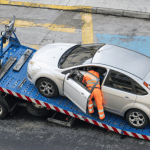
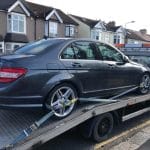
Buying a car with no MOT, no tax, or no engine that runs is often a sensible purchase. Getting it home is the part people work out afterwards, usually at the roadside with the seller waiting.
DK’s Recovery moves vehicles across Sheffield, South Yorkshire and beyond — see vehicle transportation. Call 07867 860723.
Why you usually cannot just drive it
Three things have to be true for a car to be legally on the road: valid MOT, valid tax, and insurance.
They interlock in a way that catches buyers out. You cannot tax a vehicle without a valid MOT. So an untested car cannot be taxed, and an untaxed car cannot legally be driven — which closes the loop before you have left the seller’s street.
There is one narrow exemption: you may drive an untested vehicle to a pre-booked MOT test or a pre-arranged repair appointment. Note what that does not include: driving it home. And it does not apply at all if the car has a dangerous defect.
What it costs to get wrong
Driving without a valid MOT can bring a substantial fine, and considerably more if the vehicle turns out to be in a dangerous condition. Driving untaxed is a separate matter with its own penalty. Driving uninsured is more serious again — points, a large fine, and the possibility of the car being seized.
And that is before the insurance question. A policy on a car that should not legally have been on the road is not a comfortable position if anything happens on the way home.
Before you agree a price
If the car does not run, three questions decide how easy it is to move — and therefore what moving it costs:
- Does it roll? Free-turning wheels load quickly.
- Does it steer? A locked column means it cannot be guided onto a bed.
- Does it come out of gear? An automatic stuck in park, or a manual that will not shift, needs skates under the wheels.
Ask the seller to demonstrate rather than describe. “It should be alright” is not an answer, and the difference between a straightforward load and a skated one is real money.
What to get from the seller
- The V5C, and complete the transfer before you leave.
- Both keys if they exist. A single key on a car you are already spending money on is worth negotiating over.
- The locking wheel nut key. Most commonly forgotten, most annoying to be without.
- Any service history and old MOT certificates.
- A receipt with both names, the date, the registration and the price.
Auctions have their own rules
Collection windows are usually tight and storage charges start when they end. Access is often restricted to specific gates and hours, and some sites need the transporter registered in advance.
Tell us the auction house and the collection deadline when you book. It is a different job from a driveway pick-up and the constraints are theirs, not ours.
Access matters more than distance
A car on a driveway behind two other cars, in a rear courtyard, up a narrow lane, or in a garage with a low door is a harder job than one at the kerb — regardless of how far it is going.
Describe the access honestly when you book. A flatbed needs a straight run and room to tilt the bed, and finding out otherwise on arrival helps nobody.
Once it is home
Book the MOT before you tax it, because you cannot do the second without the first. If it needs work, get it to the garage on a truck rather than risking the “pre-arranged appointment” route with a car you have not driven before — see arranging a tow to a garage.
Common questions
Can I drive a car home if I have just bought it with no MOT?
Only to a pre-booked MOT test or a pre-arranged repair appointment. Driving it home instead is not covered by that exemption, and an untested vehicle also has to be insured and taxed to be on the road at all. In practice, most people transport it.
Do I need to tax it before it can be moved?
To drive it, yes – and you cannot tax a car without a valid MOT. That combination is why buying a non-runner or an untested car almost always means arranging transport rather than driving it away.
What are the penalties for driving an untaxed or untested car?
Driving without a valid MOT can bring a substantial fine, and more if the vehicle is in a dangerous condition. Driving untaxed is a separate offence with its own penalty, and driving uninsured is more serious again, carrying points and a possible disqualification.
What should I check before agreeing to buy a non-runner?
Whether it rolls, steers and comes out of gear. A car that does all three is straightforward to load. One with a seized wheel, a locked steering column or no key needs skates or a full lift, which costs more – worth knowing before you agree a price.
Can you collect a car from a private seller or an auction?
Yes. Auctions usually have set collection windows and specific access rules, so tell us which auction house and the deadline. For a private sale, confirm the seller will be there and that the car can actually be reached from the road.
What do I need from the seller before it goes on the truck?
The V5C or proof of sale, both keys if they exist, and the locking wheel nut key. That last one is the most commonly forgotten and the most annoying to be without later.
Bought a car that cannot be driven home?
For a car transport quote, tell us the collection and delivery postcodes, vehicle make and model, whether it rolls and steers, and your preferred collection date. Confirm the price and availability before booking. 07867 860723.