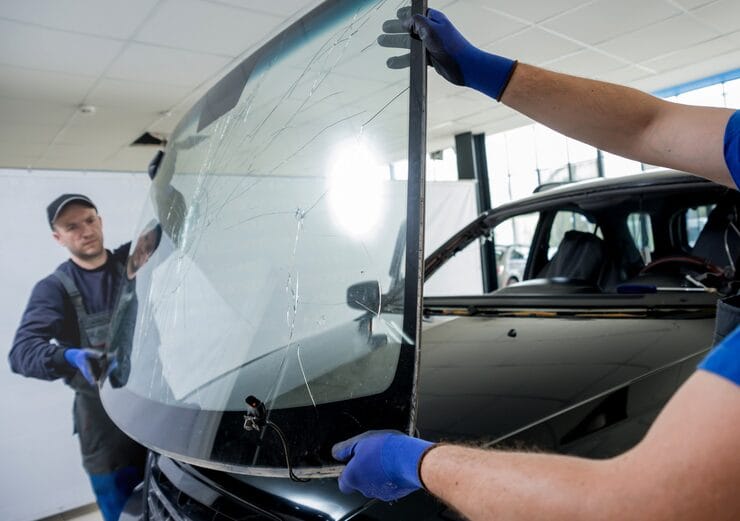
A stone chip is a nuisance. A crack across the driver’s view is an MOT failure, potentially an offence, and occasionally a reason the car should not be driven at all. The line between them is more precise than most people realise.
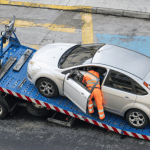
If the screen has gone and the car cannot be driven safely, DK’s Recovery covers Sheffield and South Yorkshire 24 hours a day for recovery and transport to your garage. Call 07867 860723.
What the rules actually say
The MOT splits the windscreen into zones. Directly in front of the driver, within the area swept by the wipers, damage larger than about 10mm fails. Elsewhere in the swept area the limit is around 40mm. Outside the swept area, damage matters far less.
So a 30mm chip low on the passenger side may be a non-issue, while a 12mm one in your eyeline is a failure. Position matters more than size.
Separately from the MOT, driving with a view that is genuinely obstructed can be treated as using a vehicle in a dangerous condition — points and a fine, and an insurer may take an interest if it contributed to a collision.
Repair or replace
A chip can usually be repaired if it is smaller than roughly a £1 coin, is not directly in the driver’s line of sight, and has not begun to run. Resin is injected, cured, and the damage largely disappears — a short job, and most comprehensive policies cover it with no excess because insurers would far rather pay for that than a new screen.
Once a chip has cracked outward, repair is no longer an option. Which is the whole argument for dealing with it in the first week rather than the third month.
Why chips turn into cracks
Temperature and flex. Blasting hot air at a cold windscreen on a frosty Sheffield morning is one of the most reliable ways to turn a small chip into a crack running the width of the glass. So is a pothole, a slammed door, or a cold night after a warm day.
If you have a chip and it is freezing, demist gently and gradually rather than on full heat.
When the car should not be driven
- The screen has crazed or shattered across the driver’s view. Laminated glass holds together but you cannot see through it properly.
- A crack runs across your eyeline, however thin.
- Glass has come into the cabin, or the screen is loose in its aperture.
- The damage came from a collision and the screen is bonded to a structure that may itself be damaged.
A modern windscreen is a structural component — it contributes to roof strength and supports passenger airbag deployment. A compromised screen is not only a visibility problem.
The bit garages forget to mention: recalibration
Most cars built in the last decade have a forward-facing camera mounted behind the windscreen, driving lane-keep assist, automatic emergency braking and adaptive cruise control.
Replace the glass and that camera moves fractionally, which is enough to throw off its judgement of distance and lane position. It has to be recalibrated afterwards, and not every quote includes it.
Ask directly: “does this price include ADAS recalibration, and will I get a certificate?” A cheap replacement that skips it leaves safety systems quietly misreading the road.
Rear and side glass are different
Windscreens are laminated — two layers of glass bonded to a plastic interlayer, which is why they crack but stay in one piece. Side and rear windows are usually toughened, and shatter into small blunt fragments.
A blown-out rear screen is drivable in the strict sense but miserable and unsafe in rain, and the car should not be left unsecured. That is a common reason to move a vehicle rather than drive it home.
Common questions
Is it illegal to drive with a cracked windscreen?
It can be. In the area swept by the wipers directly in front of the driver, damage larger than about 10mm will fail an MOT. Elsewhere in the swept area the limit is around 40mm. Beyond the MOT, driving with a view that is genuinely obstructed can be treated as using a vehicle in a dangerous condition, which carries points and a fine.
Can a chip be repaired instead of replacing the screen?
Often, if it is smaller than roughly a £1 coin, not directly in the driver’s line of sight, and has not started to crack outward. Repairs are quick and many comprehensive policies cover them with no excess, because insurers would rather fund a repair than a replacement.
My windscreen shattered completely. Can I drive it?
No. A laminated windscreen that has crazed over is dangerous to see through even though it holds together, and driving it is neither safe nor legal. That is a recovery job, not a drive-carefully job.
Why does a new windscreen need a camera recalibration?
Most cars from the last decade have a forward-facing camera behind the windscreen running lane assist, automatic braking and cruise control. Replacing the glass moves that camera slightly, and it has to be recalibrated or those systems can misjudge distances. Always ask whether recalibration is included.
A stone hit my screen on the Parkway. What should I do?
Get it looked at quickly rather than waiting. Temperature changes and vibration turn a repairable chip into a crack, and hot demisting onto cold glass is a common trigger. A repair costs a fraction of a replacement.
Will my insurance premium go up for a windscreen claim?
Glass claims are usually handled separately from your main policy and often do not affect no-claims discount, though this varies by insurer. Check your policy wording before deciding to pay privately.
Windscreen gone in Sheffield?
If you cannot see through it properly, do not drive it. Call 07867 860723 — 24 hours a day.