Clutches rarely fail without warning. They give you weeks of hints and then go completely, usually at the worst possible moment — pulling away at a junction, or halfway up one of Sheffield’s steeper hills. Knowing the difference between “book it in” and “stop now” is most of the value here.
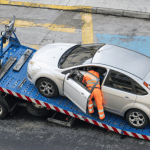
If the car cannot be driven, DK’s Recovery covers Sheffield and South Yorkshire 24 hours a day for breakdown recovery and transport to your garage. Call 07867 860723.
The warning signs, in the order they usually appear
- A high biting point. The pedal has to come almost all the way up before anything happens. The friction material is wearing.
- Slipping. The revs rise but the car does not accelerate to match — most obvious in a high gear at low speed, or on a hill.
- Juddering as you pull away, rather than a smooth take-up.
- A burning smell after hill starts or slow traffic. That is the friction material overheating.
- Noise when the pedal is down — a rumble or whine that disappears when you lift off. Usually the release bearing.
- A pedal that feels spongy, or drops to the floor. Hydraulic failure. This one is not a warning, it is the failure.
Which of those means stop
A high biting point or mild juddering is a booking-in job. Drive it gently, avoid hill starts where you can, and get it looked at within a week or two.
Stop and call for recovery if: the pedal has gone to the floor and stayed there, you cannot select gears or cannot get out of one, there is a strong burning smell, or the revs climb freely without the car moving. At that point the clutch is not going to get you home, and continuing turns a clutch job into a clutch and flywheel job.
Why “pedal to the floor” is different
Wear happens slowly. Hydraulic failure happens in a second. The master cylinder, the slave cylinder or the line between them loses pressure, and the pedal no longer disengages anything.
You may find the car is stuck in the gear it was in, or that you cannot select a gear at all from standstill. Neither is drivable in traffic. If it happened at a junction or on a hill, get the hazards on and stay put rather than trying to shuffle it somewhere.
The “start it in gear” idea
People suggest starting the engine in first gear so the starter motor drags the car forward, then changing gear by matching the revs. It is a real technique and we would still advise against it.
Most modern cars have a clutch-pedal safety switch that prevents starting in gear at all. Where it does work, it is punishing for the starter, the gearbox and the mounts — and you are then driving in traffic with no reliable way of stopping in gear. Getting the car onto a truck is cheaper than what it can cost.
Automatics and dual-clutch gearboxes
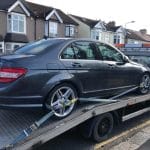
An automatic has no clutch pedal, but a dual-clutch gearbox has clutch packs that wear in a similar way. Juddering at low speed, hesitation when pulling away, or a warning light and a refusal to select drive are the equivalent symptoms. Those cars should not be towed on their driven wheels — they go on a flatbed.
Why it is worth catching early
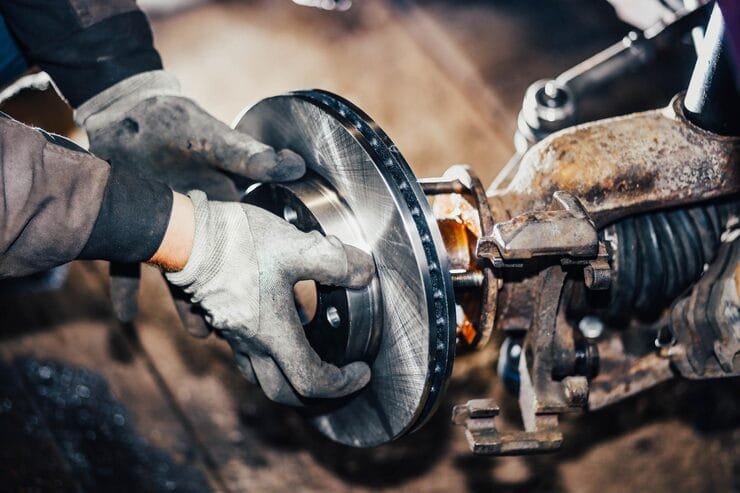
A clutch replacement means the gearbox comes out, which is where most of the labour cost sits. Catch it while it is only the clutch and it is one job. Leave it until the friction material is gone and the flywheel is scored, and you are paying for a flywheel as well — on a dual-mass flywheel, often more than the clutch itself.
The other saving is choosing when. A booked repair is your garage at your convenience; a failure is wherever it happens, plus recovery.
If it has already gone
Ring the garage first to check they can take it — see our note on arranging a tow to a garage — then tell us where the car is, whether it is stuck in gear, and where it needs to go. A car that will not come out of gear needs skates or a flatbed rather than a straightforward tow.
Common questions
Can you drive with a slipping clutch?
For a short distance, gently, to get somewhere safe – yes. As a way of continuing your journey, no. A slipping clutch generates heat and the damage accelerates quickly, and a clutch that is slipping today can fail completely without warning, usually at a junction or on a hill.
My clutch pedal has gone to the floor. What has happened?
Usually a hydraulic failure – the master or slave cylinder has lost pressure, or a fluid line has failed. Occasionally the cable has snapped on older cars. Either way you have no reliable way to select or release gears, and the car needs recovering rather than nursing home.
What does a high biting point mean?
That the friction material is wearing thin. It is a warning rather than an emergency, and it gives you time to book the work in – which is far better than the same job happening at the roadside on a Friday night.
Is a burning smell from the clutch serious?
Yes. That smell is the friction material overheating, and it usually appears during hill starts or slow traffic. Stop, let it cool, and get it looked at. Repeatedly overheating a clutch destroys it and can damage the flywheel too, which is a much larger bill.
Can I start the car in gear to get it home?
It is possible on some older cars and we would not recommend it. On a modern car with a clutch-pedal safety switch it will not work at all, and where it does work it is hard on the starter motor, the gearbox and everything in between – and you still cannot change gear safely in traffic.
Does a clutch failure damage anything else?
It can. A clutch left slipping badly can score or overheat the flywheel, and a failed release bearing can damage the gearbox input shaft. Catching it early usually keeps it to a clutch kit rather than a clutch and a flywheel.
Clutch gone in Sheffield?
Get somewhere safe, hazards on, then call. 07867 860723 — 24 hours a day across Sheffield and South Yorkshire.