A breakdown is mostly a safety problem for the first few minutes and a logistics problem after that. Get the first part right and the rest is straightforward.
DK’s Recovery covers Sheffield and South Yorkshire 24 hours a day for breakdown recovery and roadside assistance. Call 07867 860723.
First minute: get somewhere safer if you can
If the car is still moving, keep going until you reach somewhere sensible — a side road, a lay-by, a car park entrance — rather than stopping at the first sign of trouble. A car that is losing power is usually still steerable for a few hundred metres, and where you stop matters more than stopping instantly.
Once stopped: hazards on, sidelights too if the light is poor, and wheels turned away from the carriageway.
On the M1 and the Parkway
The M1 through South Yorkshire includes smart motorway sections where the hard shoulder is not always a hard shoulder. If the car will still move, come off at the next exit — that is always better than stopping on the motorway at all.
If you cannot: get as far left as possible, into an emergency area if one is within reach. Hazards on. Leave through the passenger doors, take everyone with you, and get behind the barrier and away from the vehicle. Then call 999 if you have stopped in a live lane or could not get out safely, and use the orange SOS phone rather than your mobile if there is one nearby — it tells the control room exactly where you are.
The Sheffield Parkway is a dual carriageway, not a motorway, but the same logic applies: get off it, and if you cannot, get out of the car and behind a barrier.
If you stop on the tram tracks
This is a Sheffield-specific one worth knowing. Supertram shares the road through the city centre and out toward Meadowhall, Halfway and Malin Bridge. A tram cannot steer around you and needs a long distance to stop.
If your car stops on or fouling the track, get everyone out and well clear immediately, then call 999. Do not wait for a recovery truck to arrive before moving people. Recovery is the second problem.
Working out what has happened, without taking risks
You do not need a diagnosis, only enough to know whether the car is going anywhere. A rough guide:
- Probably fixable where you are — will not start but lights work, a flat or blown tyre, wrong fuel not yet driven on, a dead battery after leaving lights on.
- Stop and do not restart — temperature gauge in the red or steam from the bonnet, oil pressure warning light, brakes feeling soft or long, steering gone heavy or vague, a loud knock or grinding that started suddenly, or any burning smell.
Never open a hot radiator cap, and do not get under a vehicle at the roadside. If the bonnet is steaming, leave it shut and let it cool.
What to have ready when you call
- Where you are. Postcode if you have it; road name and nearest junction is better; on the motorway, the number on the nearest marker post is best of all.
- The car. Make, model, colour, and whether it is petrol, diesel or electric.
- What happened and whether it still rolls, steers and comes out of gear.
- Who is with you. Passengers, children, a dog — it changes what we send and where we can take you.
Roadside fix or full recovery?
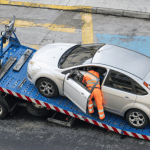
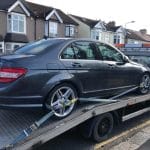
Plenty of breakdowns end with the car driving away. Jump starts, a wheel change, a fuel problem caught early — those are roadside assistance jobs. When the fault cannot be fixed safely at the kerb, it becomes a breakdown recovery job and the vehicle goes on the truck to wherever you want it.
Be wary of pressure to restart a car that overheated or lost oil pressure. Driving it a few more miles is how a repairable fault becomes a new engine.
What most often causes it
Flat or failing batteries lead by a distance, especially in the first cold week of the year. After that: tyre damage, alternator failure, clutch problems, fuel starvation, misfuelling, and lost or locked-in keys. Most are unglamorous and most are avoidable with a battery check before winter.
Common questions
What should I do if I break down on the M1 near Sheffield?
Get off at the next exit if the car will still move. If not, pull as far left as you can, ideally into an emergency area, put the hazards on, leave by the passenger doors and get behind the barrier. Call 999 if you have stopped in a live lane or cannot get out safely, then arrange recovery.
Is it safe to stay in the car?
On a motorway or dual carriageway, no – get behind the barrier. On an ordinary road where you are well off the carriageway and it is dark or raining, staying belted in with the hazards on is often safer than standing at the roadside. Judge it on where the traffic is.
What if I break down on the tram tracks in Sheffield?
Treat it as an emergency. Get everyone out and clear of the track, and call 999 – trams cannot steer around an obstruction and need a long distance to stop. Do not wait for a recovery truck before moving people to safety.
Can a breakdown be fixed at the roadside?
Often, yes. Flat batteries, fuel problems, a wheel change and some electrical faults can be sorted where you are. Anything involving overheating, brakes, steering, a warning light for oil pressure, or a noise that started suddenly usually means the car needs moving rather than restarting.
What information should I have ready when I call?
Where you are – a postcode, road name and nearest junction, or a motorway marker post. The make, model and fuel type. What happened and whether the car still rolls and steers. Whether you have passengers, children or a pet with you.
Should I call my breakdown cover or a local recovery firm?
If you have cover and you are safe, use it. Call a local firm when you need someone quickly, when the job is awkward, or when you want the vehicle taken to your own garage rather than the nearest approved one.
Broken down in Sheffield now?
Get somewhere safe first, then call. 07867 860723 — 24 hours a day across Sheffield and South Yorkshire.
One detail is worth adding to that call: the access. Height barriers, gated estates, narrow streets and soft ground all change which vehicle can come, as our guide to why a recovery truck cannot always reach you explains.