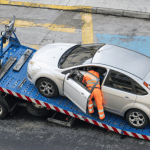
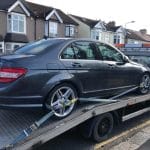
Recovery is the part everyone thinks about. What happens in the days after — where the car sits, what that costs, and what you need to get it back — is where the unpleasant surprises live.
DK’s Recovery covers Sheffield and South Yorkshire 24 hours a day. Call 07867 860723, or see our vehicle recovery page.
You choose where it goes
This is worth stating plainly because it gets forgotten in the moment. The destination is yours to decide: your own garage, a main dealer, a body shop, your driveway.
After a non-fault accident you are not obliged to use the repairer your insurer recommends, and you are never obliged to use whichever yard a recovery driver happens to prefer. If someone is steering you firmly towards a particular place, that is worth a question rather than a shrug.
The three destinations
Straight to a garage. Cleanest outcome. Ring them first to check they can take it — a workshop that is full cannot accept a non-runner, and a car delivered and refused has to be moved twice.
Home. Fine if you have somewhere off-road to put it and no immediate plan. Bear in mind an insurance engineer may need to inspect it, and a car on a driveway behind a locked gate is harder for them to reach.
Storage. The default when nothing has been decided, and the one that costs money quietly.
How storage charges work
Daily, from arrival, regardless of whether anything is happening. Nobody is being unreasonable — the space is occupied either way — but the meter does not care that you are waiting on an insurer.
Two weeks of indecision can exceed what the recovery cost. So the single most useful thing you can do is decide on a destination early, even provisionally. Moving a car twice is usually cheaper than storing it while you think.
Who pays
In a non-fault claim, the other driver’s insurer generally covers recovery and storage. In practice that depends on the claim being open, the insurer knowing where the vehicle is, and the paperwork being available.
So: keep the document showing what was recovered, from where, to where and when. Note the date it arrived. Pass both to your insurer promptly. Disputes over storage bills almost always trace back to a delay in one of those three.
Getting it back
You will normally need proof of ownership — the V5C — and photo ID that matches it. If someone else is collecting for you, expect them to need written authority as well as their own ID.
Ring ahead. Yards are not always staffed outside working hours, and turning up on a Saturday afternoon to find nobody there is a wasted journey and another day of charges.
Your belongings
Take everything at the roadside if you possibly can. Documents, both sets of keys, sat nav, dash cam and its memory card, child seats, anything of value.
Once a car is in a compound, retrieving something means arranging a visit within working hours, sometimes to a site well out of town, occasionally with an access fee. And items left in a vehicle are generally not covered by motor insurance.
If the car is not worth collecting
It happens, particularly after a write-off on an older car. Say so early rather than letting it sit.
Charges continue to accrue on an uncollected vehicle, and after a period an operator can begin disposal proceedings — by which point the bill has grown for no benefit to anybody. A phone call ends it far more cheaply than silence.
The version of this that costs the most
A vehicle moved to a yard the owner did not choose, by an operator nobody at the scene called. It happens at collision scenes, and disentangling it afterwards is considerably harder than asking one question at the roadside — who instructed you?
Common questions
Where does my car go after it is recovered?
Wherever you tell us – your garage, your home, a body shop, or a storage compound if you have not decided. The destination is your choice, and after a non-fault accident you are not obliged to use the repairer your insurer recommends.
How much does storage cost?
It varies by operator, but it is charged daily and it accrues from the day the vehicle arrives. That is why deciding on a destination quickly matters more than most people realise – a fortnight of indecision can cost more than the recovery did.
Who pays for storage after a non-fault accident?
Generally the other driver’s insurer. Keep the paperwork showing what was recovered, from where and to where, note the date the vehicle arrived, and pass it all to your insurer promptly – delays are where disputes over storage bills start.
What do I need to release my car?
Proof of ownership – usually the V5C – and photo ID matching it. If someone else is collecting on your behalf, they will normally need written authority from you as well as their own ID. Ring ahead rather than turning up.
Can I get my belongings out of a car in storage?
Usually yes, by arrangement and during working hours, though some sites charge for access. It is far easier to take everything with you at the roadside, which is worth remembering at the time.
What if I never collect it?
Charges continue to accrue, and after a period an operator can begin disposal proceedings for an uncollected vehicle. If a car is not worth recovering, say so early rather than leaving it – there are cheaper ways to end the arrangement than silence.
Need a vehicle moved or released?
Tell us where it is and where it should be. 07867 860723 — 24 hours a day.
If the vehicle was recovered after being stolen rather than after a breakdown, there is an extra layer of paperwork and inspection to work through — see what to do when a stolen car is recovered.