Most car faults are an inconvenience. Brakes are the one system where “I will get it looked at next week” is the wrong answer, and where the difference between a nuisance and a danger is worth knowing precisely.
If your brakes are not right, do not drive it. DK’s Recovery covers Sheffield and South Yorkshire 24 hours a day for breakdown recovery and transport to your garage. Call 07867 860723.
Stop driving now if
- The red brake warning light is on and the handbrake is fully released.
- The pedal goes further than normal, feels spongy, or sinks slowly while you hold steady pressure.
- The pedal goes to the floor with little or no braking.
- The car pulls sharply to one side under braking.
- You can smell burning after normal driving, or a wheel is unusually hot.
- There is fluid on the inside of a wheel or a puddle under the car near a wheel.
Any of those is a recovery job. Brakes do not partially recover, and the failure mode is one you cannot manage by driving carefully.
Book it in soon, but you can drive gently
- Consistent squealing under braking — usually the wear indicators touching the disc.
- Steering wheel shake under braking — typically warped front discs.
- An amber ABS or stability light on its own. The ordinary brakes work; the anti-lock function may not.
- A handbrake that needs more travel than it used to.
Red light or amber light
It is worth knowing which is which before it happens. The red brake light concerns the braking system itself — fluid level or a hydraulic fault. Low fluid does not happen for no reason: either the pads have worn far enough to drop the level, or there is a leak.
The amber light is usually ABS or stability control. The car still stops, but without anti-lock assistance in an emergency. Drive straight to a garage rather than carrying on as normal, particularly in the wet.
Squealing, grinding, and the difference between them
A light squeal on a damp morning that clears after a few stops is surface rust and normal. A consistent squeal under braking is the wear indicator — a small metal tab designed to make exactly that noise so you book the car in.
Grinding is different and worse. That is the pad backing plate against the disc, which means the friction material is gone. Every stop from that point is damaging the disc, and a pads job becomes pads and discs.
If you are trying to work out what the noise itself is telling you, our guide to what different car noises mean sets out grinding, squealing and knocking side by side.
Sheffield hills make it worse
Long descents — and there are plenty around here — heat brakes far more than flat driving. Riding the brake pedal down a hill instead of using a lower gear can overheat the fluid and cause brake fade, where the pedal goes soft and the car stops less well the more you use it.
If that happens, pull over safely and let them cool rather than pressing on. Fade that has appeared once on a hill will reappear on the next one.
Wet brakes and standing water
After driving through standing water, brakes can be briefly ineffective. Dry them by applying light pressure while moving slowly once clear. If the pedal still feels wrong once they have dried, something else is going on.
When it needs recovering rather than driving
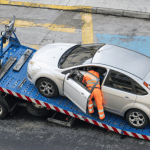
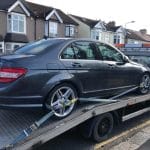
Tell us when you call that it is a brake fault. It changes how the vehicle is loaded and secured — the crew will not assume it will hold itself on a slope or stop under its own power on the bed. If the car is on a hill, leave it in gear with the wheels turned into the kerb and wait for us rather than repositioning it.
Common questions
Is it safe to drive with the brake warning light on?
Treat a red brake warning light as a stop. It can mean low fluid, a hydraulic fault or the handbrake still applied – and low fluid usually means a leak. Check the handbrake is fully off; if the light stays on, do not drive it.
What is the difference between the red and amber brake lights?
Red is the braking system itself and means stop. Amber, on most cars, is ABS or the electronic stability system – the ordinary brakes still work but the anti-lock function may not, so drive gently and directly to a garage rather than continuing normally.
My brake pedal feels soft or goes further than usual. What is that?
Usually air or fluid loss in the hydraulic system, occasionally a failing master cylinder. A pedal that sinks slowly under steady pressure is a leak until proven otherwise. This is not a drive-it-carefully fault – it is a stop-and-call one.
Is squealing always serious?
Not always. Light squealing in the wet or first thing in the morning is often surface rust burning off. Consistent squealing under braking usually means the wear indicators are touching, which is a booking-in job. A harsh grinding is different – that is metal on metal and it damages the discs every time you brake.
Why does my steering wheel shake when I brake?
Usually warped or unevenly worn front discs. It is uncomfortable rather than immediately dangerous, but braking distances suffer and it will not improve on its own.
Can you recover a car with failed brakes?
Yes, and it is the right call. Tell us when you ring that the brakes have failed – it changes how the vehicle is loaded and secured, and it means the crew will not rely on it holding itself on a slope.
Brake problem in Sheffield?
If the pedal or the warning light is telling you something, believe it. Call 07867 860723 — 24 hours a day.